Spring Decor Refresh: A Room-by-Room Checklist for UK Homes
October 06, 2026 - Home Decor

October 06, 2026 - Home Decor
October 03, 2026 - Home Decor
October 03, 2026 - Interior Design
October 01, 2026 - Home Decor
Spare rooms have a habit of becoming the household's holding pen — the ironing board, the Christmas decorations, the box of things nobody has decided what to do with. That's fine until someone's actually coming to stay. Then you notice the bare bulb, the mismatched pillows and the total absence of anywhere to put a glass of water.
The encouraging part is that a guest bedroom doesn't need new furniture to feel generous. Almost everything a visitor notices — the sheets, the light, somewhere to rest a book — is small, portable and inexpensive to change. With a clear plan and about £100, an afternoon is usually enough to make the room feel like somewhere you'd happily check into.
If you only spend properly in one place, spend it on bedding. Crisp, clean linen does more for a guest room than paint, art or accessories, because it's the part your visitor actually touches.
Look for cotton or a cotton-rich blend rather than a shiny synthetic mix, and choose a deep fitted sheet that fits over the mattress and any protector without pinging off in the night. White or a single soft neutral is the practical choice: it goes with whatever's already in the room, and it survives a hot wash after months in the airing cupboard. If your budget stretches to two sets, buy two. Being able to strip the bed and remake it straight away is worth more than any ornament.
Two pillows per person if the bed allows, and a mattress protector underneath. Wash everything before it goes on the bed — new linen smells of the packet, not of home. If you can't face ironing the whole set, at least press the pillowcases; folded with a bit of care, they give the bed its hotel edge.
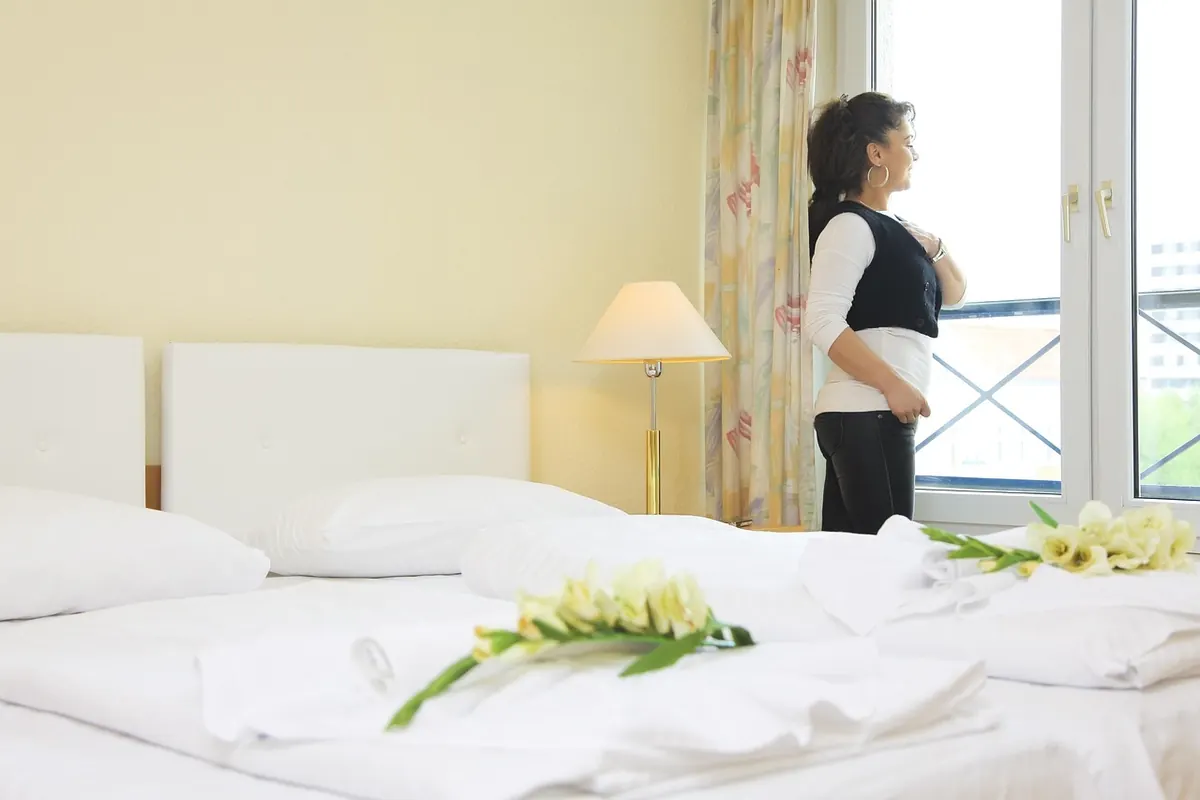
Hotel beds look expensive because of layering, not because of the thread count. A duvet, a throw or blanket folded across the foot of the bed, and a folded top sheet if you're feeling keen — that's the whole trick.
Two cushions at most. Your guest should be able to get into bed without building a small tower of textiles on the floor. If you already own a collection of decorative cushions, pick the two that work with the bedding and put the rest away.
Most spare rooms have one overhead light. It's the least flattering option available, and it makes the room feel like a utility space the moment it's switched on.
Two matching bedside lamps either side of the bed change the whole mood. Keep the shades simple, and check the fitting and maximum wattage before you buy bulbs — a warm white bulb, often sold as exactly that or listed around 2700K, makes a room feel softer than a bright white one. If there's no socket near the bed, rechargeable or battery table lamps are a sensible workaround.
One more thing: leave a low light on the landing or in the hall, or add a plug-in night light. Guests looking for the bathroom at two in the morning shouldn't have to feel their way along a wall.
A guest room feels unwelcoming when there's nowhere to empty your pockets. This is where small accessories earn their keep, and it's the cheapest part of the refresh.
None of these need to match perfectly. They need to be there.
A scatter of little frames can make a wall look busy and apologetic. One larger picture, hung so its centre sits at roughly eye level for a standing adult, reads as deliberate.
High-street frames cost far less than bespoke framing, and a plain, generous mount will make an inexpensive print look considered. A mirror is the other reliable option: it bounces light around a small room and adds nothing to the clutter. If you rent and can't drill, removable adhesive strips work on most painted walls — test one in a hidden spot first, and follow the removal instructions rather than pulling.
Guests notice smell, temperature and sound long before they notice your colour scheme.
Let the room air properly before anyone arrives. A light reed diffuser or a linen spray on the pillows is plenty; heavy plug-in air fresheners can be overwhelming in a small room and can bother people with sensitivities. If the room catches early light or street noise, a blackout blind or a spare eye mask is a small kindness, and a light blanket kept at the foot of the bed saves anyone from having to ask. Check for ticking clocks, and leave a spare phone charger by the bed — it's the forgotten item guests are most likely to need.
Run through this and the room will take care of itself:
Spend the biggest share of your budget on bedding, a smaller share on two lamps, and keep the remainder for art and the small things — the tray, the glass, the hangers, the hooks. None of it is dramatic on its own. Together, it's the difference between a room someone sleeps in and a room they're pleased to come back to.
Photo: CityhostelBerlin / Pixabay
A practical room-by-room plan for lightening textiles, clearing clutter and adding fresh colour across a UK home...
Measuring each angled face, choosing a track that bends, and matching heading and fabric weight are what make bay...
October 06, 2026 - Home Decor
October 03, 2026 - Home Decor
October 03, 2026 - Interior Design
Copyright © 2026 Ripple Room. All Right Reserved.